Guest Post: Feminism: Much More Than Women’s Rights

Meiling Jabbaar, former high school feminism student, and Ileana Jiménez (Feminist Teacher).

Last year, I launched an on-going guest post series written by my former high school students reflecting on the impact of learning feminism(s) in high school. To mark the beginning of the school year and to inspire teachers to bring a feminist vision to their curricula, I’m posting a piece written by my former student, Meiling Jabbaar, who took my course on feminism her senior year last fall. In this essay, Meiling teaches all of us that learning about feminism in high school made an impact on finding her voice. Meiling will be attending Brown University this fall.

Growing up as a young woman in today’s society, I have always been aware of issues that women, teenage girls, and even young girls face.  When I learned about the feminism course offered by Ileana Jiménez, who teaches in the English department at my high school, I realized that I would have the chance to discuss topics to which I could relate.  But little did I know how much of an impact the class would have on me.

My Fierce and Fabulous: Feminist Women Writers, Artists, and Activists class, which I took during the first trimester of my senior year, did much more than expose me to the world of feminism.  In providing the space to talk about issues important to me, such as female stereotypes, issues of beauty, and how women are portrayed in the media, I learned ways in which I could solve these problems, while at the same time, I learned a lot about myself.

Before taking the class, the only thing that came to mind when I thought about feminism was women’s rights.  I soon learned that feminism entails so much more.  First, we focused on feminist theory.  We read the works of various renowned feminist writers, including bell hooks, Audre Lorde, Cherríe Moraga, and Virginia Woolf.  I was overwhelmed and moved by their powerful pieces that analyze the history and roots of the struggles that plague the lives of women.  After reading these writers, my eyes were opened to what feminism truly represents. Continue reading

My Fulbright to México: Creating Safe Schools for All

My Fulbright presentation at UNAM on LGBT youth in schools in Mexico City.

Every now and then, teachers get the opportunity of a lifetime.

I know I did when I was selected to be a member of the second cohort of Distinguished Fulbright Award in Teaching (DAT) recipients. Still a fairly new addition to the family of Fulbright awards, the DAT Fulbright provides experienced teachers the chance to conduct research in a host country in an area of education about which they feel passionate.

I’ve just recently returned from Mexico City after having spent six months as a guest researcher in the gender studies program, Programa Universitario de Estudios de Género (PUEG) at the Universidad Nacional Autónoma de México (UNAM). My research focused on interviewing high school-aged LGBT youth on themes relating to gender and sexuality; coming out/not coming out; safety and discrimination; and their vision for making their school’s curriculum inclusive of LGBT themes and issues.

I could not have had a more life-transforming experience.

While I was interviewing 32 students, six teachers, and two administrators, I kept marveling at the fact that this was the most extraordinary opportunity to create change in schools on a global level. Here was a young man sharing how his mom didn’t hug him when he came out; and here was a young woman telling me how she was harassed at school for being transgender and how she had the guts to come to school wearing a dress when everybody else knew her previously as a boy; and here was a young woman telling me her dreams for making her school more respectful of all her friends.

And here was Fulbright giving me the chance to be a researcher, not as a PhD student, not as a professor, but as a teacher. Continue reading

Feminist Teacher on the Radio

Feminist Magazine, KPFK 90.7, Pacifica Radio

Within the past few months, I’ve had the terrific honor of being a guest on two feminist radio shows: Digital Sisterhood Network’s Feminism Online Project and Feminist Magazine. Last night, Feminist Magazine co-hosts Celina Alvarez and Christene Kings interviewed me during their show on KPFK 90.7 Pacifica Radio in Los Angeles. Calling in from México, I was thrilled to talk to Celina and Christene about my work with young people in high school.

One of the points I made was that the reason why students are attracted to feminism is because they can use its tools in their everyday lives: “What I do in the classroom not only focuses on gender and sexuality but also race and class . . . Students get excited because it’s about them . . . they face sexism, they face racism, they face classism, they face homophobia, transphobia, all of it, and feminism is the perfect launching point for those kinds of conversations. They want their education to be personal but they also want it to be useable, and I think that feminism is one of those things that you can teach that is so useable and young people just grab it.”

In case you missed the show last night, here’s the archive: my segment starts at 28:24 and ends at 42:18.

Earlier in May, I was also invited by Ananda Leeke from the Digital Sisterhood Network to be her guest for the entire hour (just press play). I was able to talk at length with Ananda about the Fulbright research I’m doing in México on LGBT youth in schools as well as my work in schools in the U.S. During the course of the show, my student and fellow Twitter fiend, Steven Susaña, joined the chat section of the program. Steven took my feminism course last fall, and since then, has been a committed feminist activist and male ally. It was so wonderful to have him as part of the conversation about teaching and learning feminism at the high school level.

Throughout both of these interviews, I was reminded again and again how important feminist media is and how important it is to lift each other’s work through our blogs, op-eds, radio programs, television appearances, and the like. We have to be the ones to invite each other to be guests on our blogs and programs if we want to change the landscape of voices. We have to be the ones to invite a different conversation for a different world.

Spoke at Smith Women in Education Conference (VIDEO)

In March of this year, I was invited to sit on several panels as part of the Smith Women in Education conference at Smith College in Northampton, MA. I was thrilled to be back on campus even if just for a few days, as it took place right in the middle of my Fulbright time in México; it was absolutely invigorating and inspiring to be among Smith sisters in education making change in their classrooms and in their communities.

One of the things I talked about during a panel titled Teaching in the 21st Century, that was moderated by Smith alumna Joan Sigel Schuman from the class of 1962, was the importance of teachers coming to the classroom as whole people, especially along lines of race, class, gender, and sexuality. Our students know when we are not being real or true with them, and we as teachers also suffer when we are not our whole selves with our students, our colleagues, and our school communities.

I went through a time of not being a whole person myself when as a young teacher, I was not completely true to my students during my time in girls’ schools between 1997-2004. There I was, teaching young women to be empowered and to become self-actualized as young feminists, and I was not even out to my students; as a result, I was not a whole educator or a whole person in my profession. I was not self-actualized. Continue reading

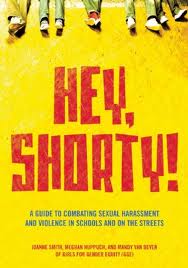
Book Review: “Hey Shorty!” Provides Educators Steps Against Sexual Harassment in Schools

(Girls for Gender Equity)

Reading Hey Shorty!: A Guide to Combating Sexual Harassment and Violence in Public Schools and on the Streets is like drinking vitamin water for activists. An immersion in how-to community organizing, movement building, and feminist activism against sexual harassment, this book is the one we’ve all been waiting for. Written in easy-to-read language and clearly outlined, bullet point action steps, co-authors Meghan Huppuch, Joanne N. Smith, and Mandy Van Deven make the case for feminist activism in schools in ways that will make our non-initiated colleagues understand that we need to act now.

As hard as it is for some educators and administrators to admit, all schools are sexual and sexualized spaces. More specifically, when it comes to sexual harassment, all schools are spaces of power and submission, authority and silence.

Pervasive and destructive, sexual harassment is considered to be a “typical part” of school life by two-thirds of the 1,189 New York City public school students surveyed by Girls for Gender Equity (GGE), a Brooklyn-based girls advocacy and movement building group dedicated to gender justice.

In this new and important book, GGE co-authors Huppuch, Smith, and Van Deven, reveal urgent research that the young women in their Sisters in Strength program discovered.

Their three pivotal findings should press those of us who are educators and school leaders to respond: 1) in-school sexual harassment occurs in many ways, to many people, and in many locations; 2) sexual harassment is a “normal” part of young people’s school experience, and 3) students want and need more education about sexual harassment.  Continue reading

Spoke at Mexico City’s First International Conference on Bullying

This slideshow requires JavaScript.

It was a complete honor to be a part of Mexico City’s first international conference on bullying earlier this week. Bringing together speakers from around the world—including Argentina, Brazil, Mexico, and Spain—the Congreso Internacional de Bullying was hosted by the office of Mexico City’s Secretary of Education, Maestro (Mtro.) Mario Delgado Carrillo.

As the opening speaker, I shared the context of some of the most tragic bullying stories the U.S. has endured these last few years, especially in the form of bullycides, which is the preferred term when referring to suicides that have resulted from bullying. Stories such as those of Carl Joseph Walker-Hoover, Phoebe Prince, and Tyler Clementi, have catapulted us into an even more pressing era for making change in our schools.  Continue reading

Guest Post: Prepare for the Day of Silence: Support Student-Activists

Day of Silence, April 15, 2011

To help support educators sponsoring the Day of Silence in their schools, I asked Elizabeth J. Meyer to write a guest post providing advice for this Friday’s national event. Meyer is an Assistant Professor in the Department of Education at Concordia University in Montreal, Quebec. She is the author of two books: Gender, bullying, and harassment: Strategies to end sexism and homophobia in schools (2009) and Gender and sexual diversity in schools (2010). She blogs regularly for Psychology Today and the Freire International Project for Critical Pedagogy.

I was excited to get the invitation to write this guest post about the upcoming Day of Silence (DOS) on Friday, April 15, 2011. This is an important event that is taking place in high schools and universities across the country and I was asked to offer some suggestions for educators on how best to support students who have decided to participate in this event.

What is the Day of Silence?

This somewhat controversial event began in 1996 at the University of Virginia when a group of students chose to remain silent for one day to call attention to the anti-LGBT name-calling and harassment at their school.  In 2008, over 8,000 middle and high schools registered with GLSEN (The Gay, Lesbian, and Straight Education Network) to participate. Although it was originally a grassroots, student-initiated event, GLSEN has provided their infrastructure to create educational resources and organizing ideas to their network of chapters and via their website to support widespread participation. There has been backlash in some communities against this event, but students and teachers who have participated indicate that it is a non-confrontational, yet empowering way to highlight these issues in a school community. Continue reading

Teaching Boys Feminism

The following is cross-posted at Gender Across Borders and Equality 101 for their jointly hosted Feminism & Education series.


Each year, boys sign up for my high school course on feminism (photo, Ileana Jiménez)

When I was in college, I always thought that teaching girls about feminism was my life’s calling. It turns out that teaching boys about feminism has made that calling even more profound.

In the past three years, I have taught a high school course on feminism titled Fierce and Fabulous: Feminist Writers, Artists, and Activists. Each year, girls and boys sign up for the class and each year, these young men are awakened not only to injustices regarding race, class, and gender in national and global contexts but also to injustices regarding how they have been socialized as boys.

With every example of women, girls, queer folks, and people of color facing discrimination, marginalization, and violence, boys awaken. White male boys begin to realize the male privilege they have enjoyed in a culture that valorizes powerful white men while boys of color gain language to describe their painful experiences of racism and classism. And each year, without fail, regardless of racial identity or socioeconomic class, the boys—both straight and gay—express their fear of being called a “fag.” Continue reading

Guest Post: On International Anti-Street Harassment Day, AtreveteDF Urges Youth Education

AtreveteDF, a new chapter of Hollaback!, fights against street harassment throughout Mexico City.

Earlier this fall, Feminist Teacher readers learned about the work that my high school students did with Emily May’s Hollaback! anti-street harassment movement. In particular, my student Grace Tobin testified at a New York City Council hearing on street harassment and the peers in her class sent in their powerful testimonies to the Hollaback blog. The importance of addressing street harassment in schools was never made more apparent to me than when my students shared their stories about being harassed on the subways and streets of New York, especially going to and from school.

Now that I’m in Mexico on a Fulbright, I have had the honor to meet with the founder of the Hollaback! chapter here in Mexico City, called AtreveteDF. A fairly new addition to the national and now global work that Hollaback! started in 2005, AtreveteDF is a growing force in the anti-street harassment movement. To mark International Anti-Street Harassment Day today, I invited AtreveteDF to write a guest post sharing its work and vision, especially in relation to the need to address this issue with young people. Below, readers will find both English and Spanish versions of AtreveteDF’s guest post. Please note that due to safety concerns, AtreveteDF contributed their post anonymously.

Education Against Street Harassment

One memory remains from a recent visit to a soccer stadium here in Mexico. Two kids, who were about 6 or 7, were shouting–in an almost eloquent manner–quite derogatory and objectifying comments to the cheerleaders and other women in the stadium. They also made comments directed at the players of the opposing team regarding homosexuality and their supposed “lack of manliness” as well as to members from their own team when players failed to score. People passed by and laughed; most men and women seemed to applaud this behavior, and nobody, including myself, asked them to be respectful or otherwise.

Today is International Anti- Street Harassment Day. When we speak of the daily realities many women and LGBTQ folks face when they walk down the street, let’s not forget to mention the children and youth who learn how to repeat these behaviors from the widespread sexual violence in our communities, the media, their homes, streets and schools. Continue reading

Call for Applications: NEH Summer Seminar: Varieties of American Feminism, 1830-1930

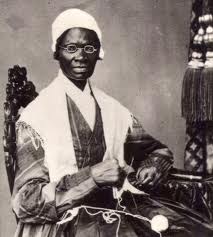
Sojourner Truth

The following is a guest post from Elisabeth Israels Perry, who is the John Francis Bannon, SJ, Professor, Emeritus at Saint Louis University in Saint Louis, MO. A specialist in American women’s history, Perry will be offering an NEH seminar for teachers called Varieties of American Feminism, 1830-1930 this summer.  I invited Perry to share more about the scope of the seminar and how to apply. The deadline is March 1.

Hello feminist teachers!  My name is Elisabeth Israels Perry, and I’m an Emeritus Professor of History and Women’s Studies at Saint Louis University.  This coming summer, I’m directing a seminar for teachers called “Varieties of American Feminism, 1830-1930,” which is sponsored by the National Endowment for the Humanities and the Program in Women, Gender, and Sexuality Studies at Washington University-St. Louis.  It will be held in St. Louis, Missouri, on the Wash U campus, for four weeks from June 27 to July 22, 2011.

The purpose of the seminar is to provide teachers an opportunity to discuss with colleagues some of the great writings and speeches from America’s first feminist movement.  We address the following questions:  what is feminism?  What are its historical roots and essential components? How have feminists differed from one another, and how do early feminists differ from feminists today?  What aspects of feminist traditions are important for today’s youth to know about, and how can we best convey that knowledge to them?  Continue reading